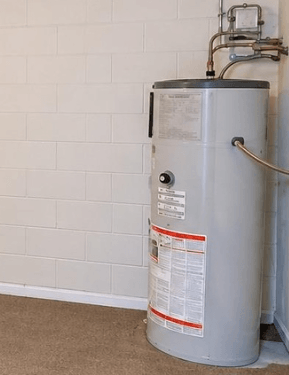
A garage, utility closet and condo cabinet have different clearance, drainage and service access constraints. Leave room for future maintenance and verify that the new unit can be brought into position.
Define the connection work
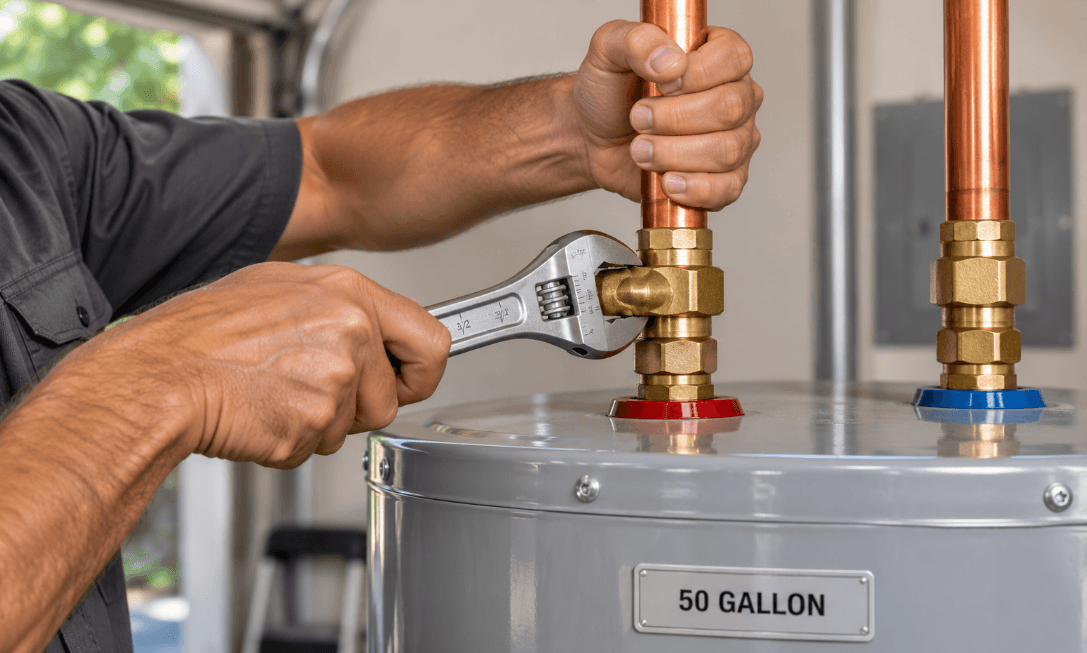
Review the cold-water shutoff, hot and cold connections, drain pan where applicable and the temperature-and-pressure relief discharge. Electric and gas models have different supply requirements. A relocation or fuel change can add substantial work.
Know what startup covers
Confirm leak checks, utility connection checks and hot-water delivery at fixtures. Ask who handles required inspections and retain the model information, warranty terms and maintenance instructions. The published benchmark covers standard installations. New lines and relocations need an address-specific estimate.
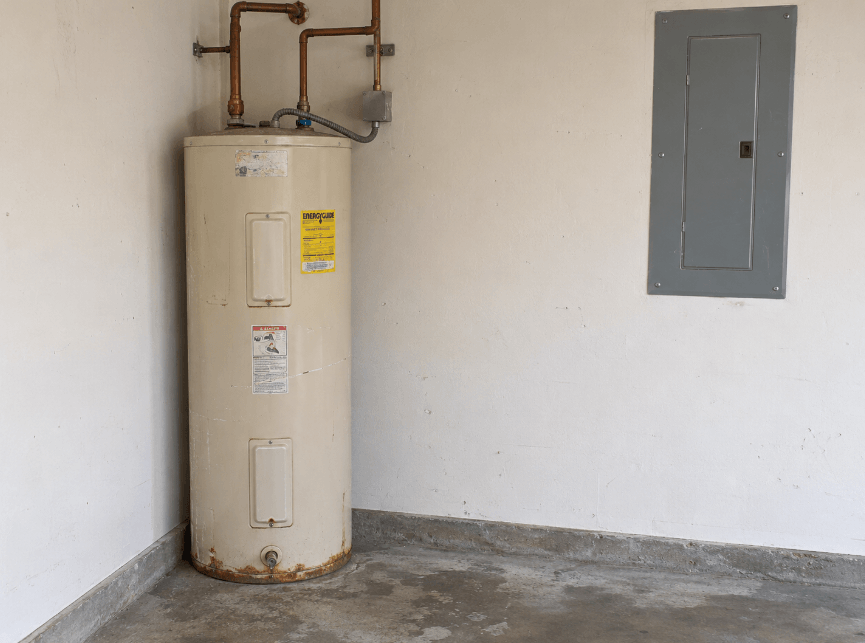
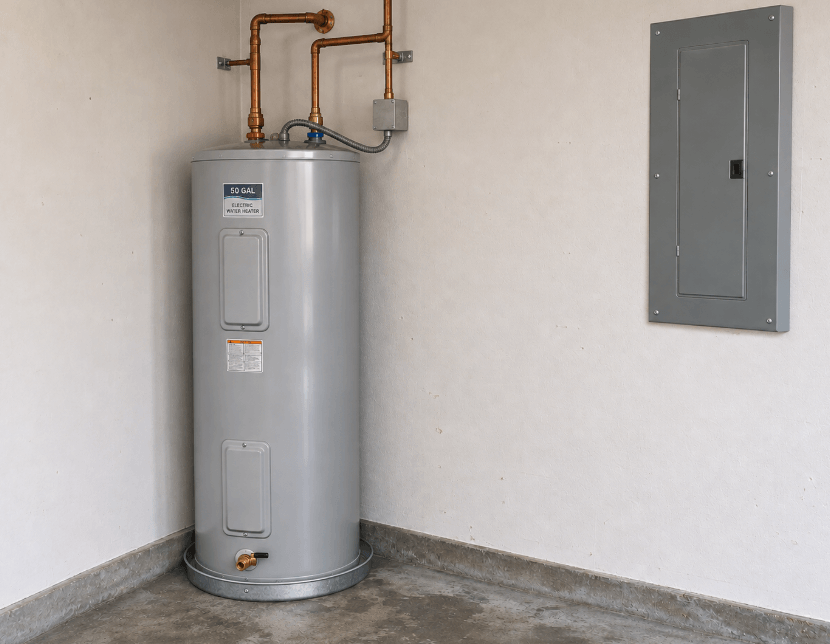
Before & After
BeforeAfter
50 Gallon Water Heater Replacement in Lauderdale Lakes, FL
The homeowner wanted a new 50 gallon water heater in the same garage location. The old tank was more than 15 years old and had started rusting at the bottom. Sediment buildup kept it from draining properly. We replaced it with an energy-efficient model expected to last about 15 years with regular maintenance.
Project Cost
$1,820
Time Frame
5 hours
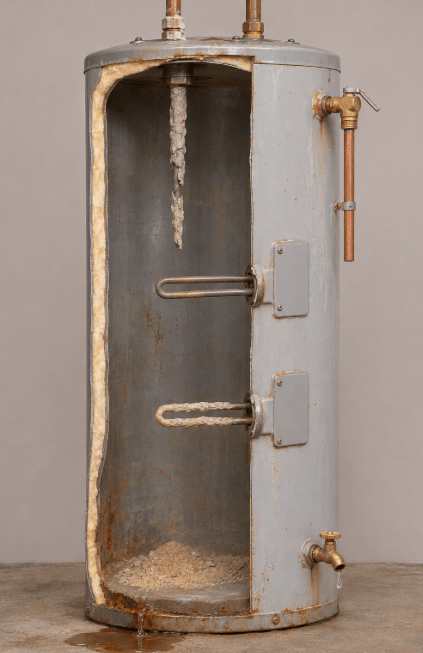
Five Places a Water Heater Can Fail
Match each numbered marker to the repair notes.
1 Temperature and pressure relief valve
Why it happens The valve may open because water pressure or temperature rises too high. A worn valve can also seep after the pressure returns to normal.
Repair Check what caused the discharge. Correct the underlying issue or replace a faulty valve with a properly rated one. Never cap the outlet.
2 Anode rod
Why it happens This rod gradually corrodes to help protect the steel tank. Water chemistry and use affect how quickly it wears.
Repair Replace a depleted rod while the tank is sound. A new rod cannot repair a tank that already leaks through its wall.
3 Electric elements and thermostats
Why it happens An element can fail electrically or collect mineral scale. A thermostat can also stop switching the element on or off correctly.
Repair Test the controls and elements. Replace the failed part or a leaking element gasket when the tank itself remains intact.
4 Bottom drain valve
Why it happens Grit can keep the valve from closing. A worn seal or a leak around the threads can also cause dripping.
Repair Identify the leak at the spout or threaded connection. Replace a damaged valve if the tank fitting can still hold a seal.
5 Sediment and rust at the base
Why it happens Minerals settle at the bottom and can cause rumbling or clog the drain. A puddle with rust may come from a corroded tank or a leak that ran down from above.
Repair or replace Flush sediment from a sound tank when appropriate. Replace the heater if water comes through the tank wall or seam.
Frequently Asked Questions
Does a first-time installation cost the same as a swap?+
A new location may need water lines, drainage, a circuit or gas and venting work. Existing compatible connections typically simplify a standard installation.